
An Excerpt from Liane’s The Herbal Fertility Handbook
used with permission from Storey Publishing.
By Liane Moccia, RH(AHG), Clinical Herbalist & Author of The Herbal Fertility Handbook (Storey Publishing, 2025)
Getting Better Sleep
While getting a good night’s rest is an important part of managing stress, lack of sleep does more than just make us tired and cranky. It can increase oxidative stress, which, as we know, is the enemy of both healthy sperm and healthy eggs. Healthy sleep helps regulate the hormones important to reproduction, and disruptions in our slumber negatively affect fertility.
Essential for Producing Fertility Hormones
Sleep affects the production of the key fertility hormones estrogen, progesterone, LH, and FSH. Proper sleep is critical to keep these hormones in balance. Long-term insomnia may directly affect the release of the hormone that triggers ovulation (LH), resulting in irregular cycles.
LH and FSH are also crucial for the production of testosterone and sperm in the testes. Testosterone plays an important role in libido, erectile function, and sperm health. Getting only 5 hours of sleep can decrease testosterone production by about 15 percent, which is equivalent to the decline a person would experience aging naturally over 15 years. Compounding matters, low testosterone may get in the way of a good night’s sleep, making it harder to fall asleep and stay asleep. It becomes a vicious cycle—the less you sleep the lower your testosterone production falls, and the lower testosterone levels make it harder for you to sleep.
Another important fertility hormone is leptin, which regulates the menstrual cycle and affects ovulation. Research shows that getting less than 7–8 hours of sleep has been associated with reduced leptin levels the following day, and disturbances in this hormone have been linked to irregular menstrual cycles and poor egg quality.
Herbs to Support Healthy Sleep
Coupling herbs with healthy sleep habits is a powerful way to break the sleep-stress cycle and get back on track for a consistent and restorative night’s rest. Making a cup of herbal tea after dinner is a great way to wind down from your day and tell your body it’s time to relax.
Chamomile
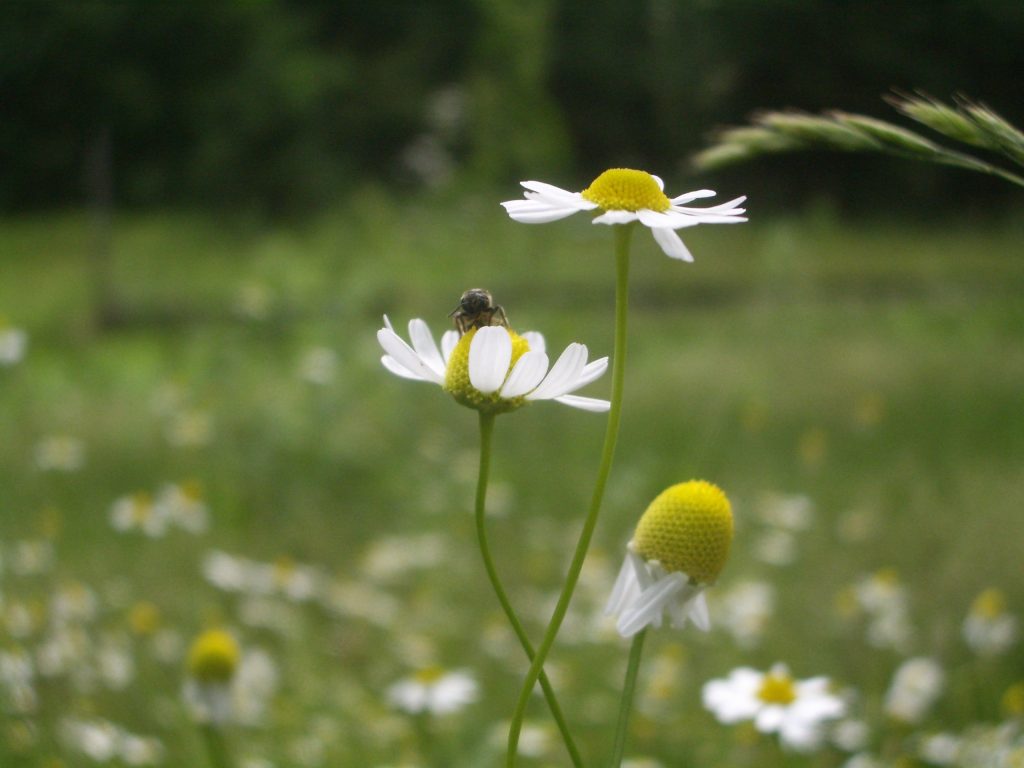
Chamomile (Matricaria chamomilla) is often overlooked as a common tea, but don’t underestimate the medicinal powers of this familiar herb! It is a powerful nervine and boasts a long list of herbal benefits, such as reducing inflammation, fighting viruses and bacteria, decreasing anxiety, improving digestion, and supporting sleep.
Powerful Support for PMS
Studies have shown that chamomile relieves menstrual cramps just as well as (or better than, in some studies) nonsteroidal, anti-inflammatory drugs (such as ibuprofen) and is effective in reducing the emotional symptoms associated with PMS. Even modest amounts were more effective than a placebo at relieving anxiety and depression in one clinical study. Studies used both capsules and tea, but when using tea the typical dose was 2 cups per day.
I find chamomile helpful for PMS mood disturbances, anxiety, or irritability, particularly in people who have a “nervous stomach.” Chamomile helps people switch from the tense, sympathetic nervous system mode, or stress mode, to the more relaxed parasympathetic mode. Many people find chamomile’s calming effects are not too sedating to use during the day, but they are strong enough to help with insomnia in the evening.
To fully enjoy a medicinally potent and delicious cup of chamomile tea, skip the powdery tea bags and try a high-quality, organic, loose-leaf chamomile tea. You will notice most of the flowers are still whole, and the aroma is full and complex. Chamomile is also available as a tincture or capsule.
Chamomile is generally safe for most people but can cause allergic reactions in some individuals. People are more likely to react negatively if they’re allergic to related plants, such as ragweed, chrysanthemums, marigolds, or daisies.
Typical Dosage Ranges
Tea: 1 tablespoon of dried chamomile per cup of tea, 2–4 cups per day
Tincture: 4–6 mL, two or three times per day
Capsules: 250–500 mg, two or three times per day
Cup of Calm Tea
This soothing blend combines chamomile’s anxiety-relieving benefits with the mood-boosting effects of lemon balm, while a pinch of lavender adds a lovely flavor and an extra calming layer.
- ½ tablespoon dried chamomile flowers
- ½ tablespoon dried lemon balm
- Pinch of dried lavender flower buds
- 8 ounces boiling water
Place the herbs in a mesh tea basket in a mug. Cover the herbs with the boiling water and steep for 5–20 minutes. Steeping the tea for 5 minutes will bring out the flavor and medicinal qualities, while steeping longer will bring out more of chamomile’s bitter flavors (helpful for digestion) and make a stronger medicinal tea. Remove the tea basket and enjoy.
Combining adaptogens and nervines is a powerful way to support yourself through stressful times, particularly when feeling drained, overwhelmed, scared, anxious, or disappointed . . . feelings often associated with infertility. Fertility journeys can be hard, and herbs help us cope with hard things.
 Liane Moccia, RH(AHG), is a clinical herbalist specializing in fertility and preconception planning, supporting individuals and couples in her private practice since 2017.
Learn More
- Check out Liane’s guest podcasts with Camille Freeman (In The Clinic with Camille) and the longer Jiling Lin (Mountain Rose Herbs Herbal Radio: Tea Talks with Jiling).
- Order the book from Liane here